Kendra Chan SEEDS Fellowship with USFWS
The Ecological Society of America, Strategies for Ecology Education, Diversity and Sustainability (SEEDS) program is seeking an undergraduate student to participate in a fellowship with our partners at the US Fish and Wildlife Service in Ventura, California. This fellowship is a unique opportunity for students to get the very best undergraduate research experience and mentorship. The fellow would have the opportunity to select and work on their preferred research project with some outstanding federal researchers and afterwards complete a scientific presentation to share with the ecology community at the 2027 ESA Annual Meeting in Toronto, CA.
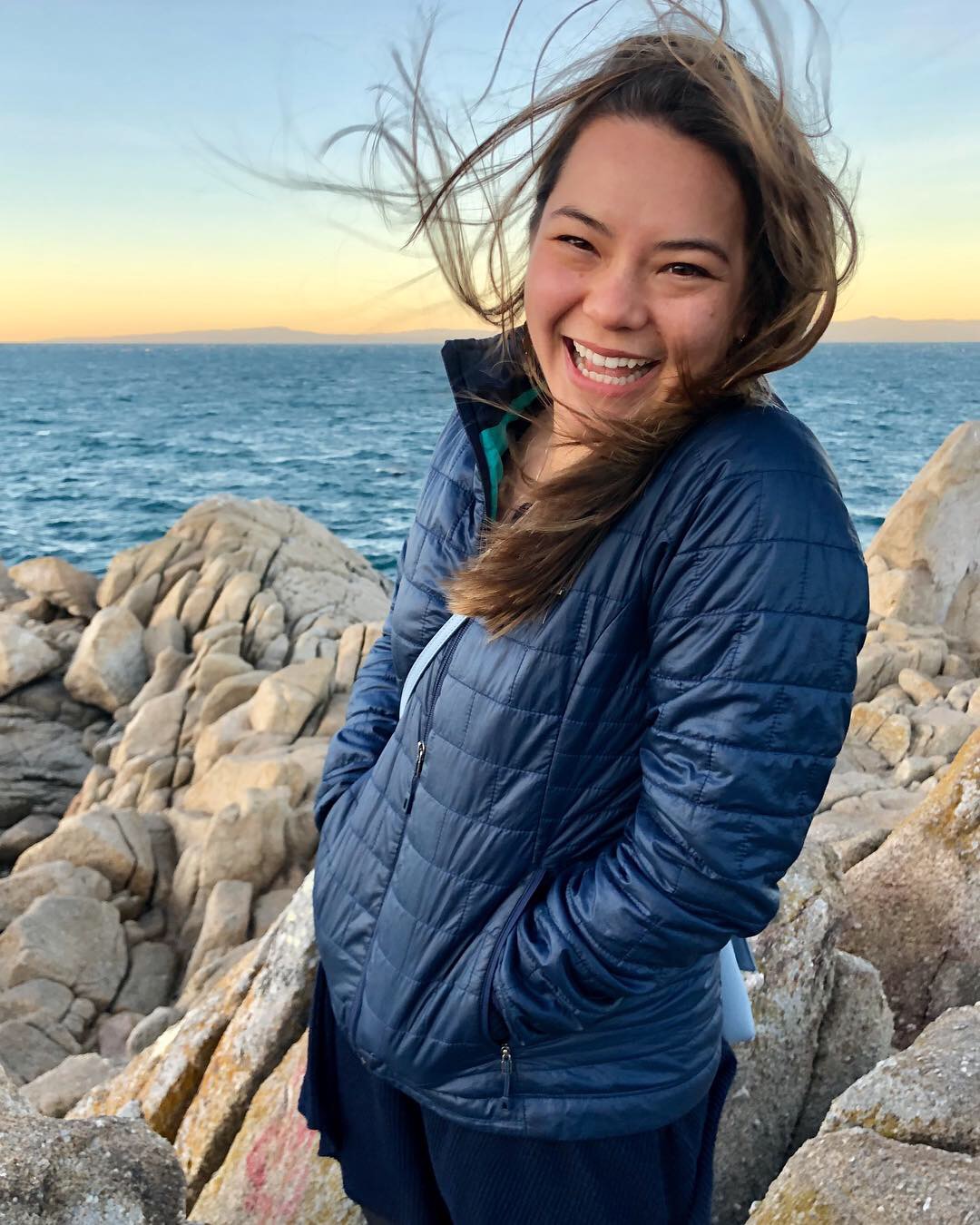
The Kendra Chan SEEDS Fellowship honors the late wildlife biologist Kendra Chan (pictured) by giving budding scientists an opportunity to learn about the U.S. Fish and Wildlife Service’s mission and help endangered species. Kendra Chan joined the Service through the Directorate Fellowship Program in 2016 after graduating from the University of California, Davis. She served as a biologist with the Service in Ventura until 2019.
Requirements for applicants:
- Must be a US Citizen
- Must have a valid driver’s license
- Must be a member of a California SEEDS Chapter, and graduate by/after May 2027.
The award includes:
- A fully funded and mentored 12-week summer research experience as a volunteer with the USFWS in Ventura, CA.
- A $500/week stipend + housing assistance, and transportation, provided through ESA.
- Fellow will pick 1 out of 3 possible summer research projects listed.
- Travel awards to join SEEDS at the following events:
- Participate in the SEEDS Leadership Meeting, September 2026 at the Yosemite Field Station
- Participate in the SEEDS National Field Trip, Spring 2027
- Present your research project at the ESA Annual Meeting, Summer 2027 in Toronto, Canada.
- Estimated total value of the Fellowship is $18,000.
Strong candidates are:
- Someone who demonstrates a strong passion for ecology and environmental sciences.
- Motivated and able to work in a highly independent manner.
- Maintain regular and reliable communication via email, phone, and web meetings.
- Must participate in scheduled check-in meetings with SEEDS staff and USFWS.
- Meet all deadlines.
The fellow will pick one of these research projects available with the USFWS:
- Smith Blue Butterfly: The Smith’s blue butterfly was listed as an endangered species in 1976. The Smith’s blue is a small butterfly endemic to the central coast of California. The Smith’s blue is an annual species that primarily uses two species of buckwheat (Eriogonum latifolium and parvifolium) that grow in sand dunes, grasslands, and chaparral habitats in Monterey and San Luis Obispo Counties in two metapopulations. Beginning in 2020, a Salinas River National Wildlife Refuge biologist observed a rust-like pathogen affecting the E. latifolium on the northernmost edge of the Smith’s blue occupied range. The affected buckwheat had smaller size, fewer flowerheads, and general lack of vigor and vitality compared to unaffected plants. On June 28, 2024, a similar pathogen was observed on E. latifolium at a mitigation property in Sand City. Because the Smith’s blue relies on healthy buckwheat in the Northern metapopulation for recovery, any threats to the host plant need to be understood, managed, and eliminated or controlled. The selected fellow could work on the following aspects of this project:
- Development of assessment and mapping strategy for accessible lands within the Northern Metapopulation when latifolium occurs.
- GIS mapping of occurrence and extent of pathogen on latifolium.
- Photo documentation of affected plants and surrounding habitat.
- Collection and submission of pathogen samples for analysis.
- Treatment and management guidance for land managers based on findings of pathogen analysis.
- California Tiger Salamander: Fully digitizing the contents of our Santa Barbra California Tiger Salamander filing cabinet—including lots of physical media (i.e., CD, flash drive, handwritten notes, and print records and manilla file folders)—and making an ESA-conference-quality science project out of such work (e.g., detailing the history of a success/failure stories with synthesized lessons and recommendations and a complete digitized library as two deliverables). USFWS need to make these legacy digital/print data more searchable and useful, particularly more at the ready to help inform new and ongoing projects, as well as track important project histories. We can guarantee some field time, but this is largely an important office-based project.
- Deliverable 1: Two digitized libraries: one saved to the VFWO network drive and a copy saved to, or mirrored on, Microsoft OneDrive. The library would organize print/digital files from the cabinet by Fiscal Year -> Property -> Project -> Endangered Species Act Section, and with Draft and Final authorization/background documents as well as relevant scientific/commercial Literature, Survey Data, and Photos at the bottom level of the organizational hierarchy.
- Deliverable 2: Poster for the ESA meeting: a qualitative and/or quantitative (socioecological) study of the history of a success/failure conservation story(ies) with synthesized lessons and recommendations to help inform biologists and enhance species management toward recovery.
- San Joaquin Kit Fox: The San Joaquin kit fox (listed as endangered) roams throughout much of the valley floor and foothills of the San Joaquin Valley in California, from San Joaquin County in the north to Kern County in the south. The kit fox’s range also includes valleys along the Coast Range, including the Panoche and Cuyama valleys and the Carrizo Plain in San Luis Obispo County. Many federal and state agencies actively monitor for San Joaquin kit fox and conduct projects that require surveys for this species. Previously, ‘spotlight surveys’ have been utilized to survey for this species; however the Service has learned that this is not the most effective method to conduct presence/absence surveys for San Joaquin kit fox. Rather ‘baited camera trap’ surveys are more effective in determining whether kit foxes are present on a landscape. The Service is looking for assistance in developing standardized baited camera trap methodology to share with partners and project proponents to aid biologists in switching to the preferred method. The Kit Fox species in our area occurs in low numbers and proper detection is difficult with current survey guidelines. This research project would be primarily office based but we would be able to arrange field work and explore the species and habitat.
- Develop and finalize baited camera trap methodology for San Joaquin kit fox.
Apply by May 25, 2026
We encourage you to browse the NSF Research Experiences for Undergraduate (REU) sites program for opportunities.
Please sign up for the SEEDS listservto be informed of the range of SEEDS opportunities.
Questions?
Contact: seeds@esa.org