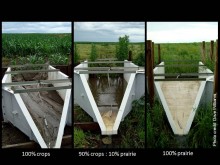
Lisa Schulte Moore, an professor of natural resource ecology and management at Iowa State University, seems to have the energy of three people. She has a hand in agricultural landscape management, bioenergy development, oak restoration, and hemlock and pine forest management, among other projects, and still makes time to drive all over Iowa, talking to farmers. In this episode of Field Talk, she explains how integrating STRIPs of prairie into conventional row crops improves water quality — and helps farms, waterways, and wildlife.
This is the first interview in a series exploring “land-sparing” and “land-sharing” strategies to conserve wildness and a rich tapestry of species in our human dominated world. Read more ›
National Park Service plant ecologist Carl Roland lives in Alaska, where climate change is palpably present. Ecologists have predicted major landscape-scale changes in the future of the Alaskan interior, with a potential shift from the iconic black and white… Read more ›
“It matters because we’re facing global change – these are global phenomena, so we need global information,” said Erle Ellis, a professor of geography & environmental systems at the University of Maryland, Baltimore County, talking about the low resolution of… Read more ›
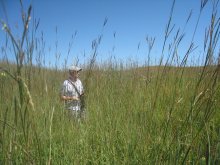
Kansas native Jesse Nippert loves the prairie. He spends much of his time immersed in the tall grass as an assistant professor at Kansas State University. Though agriculture has vastly changed the plains of North America, pockets of tall grass… Read more ›
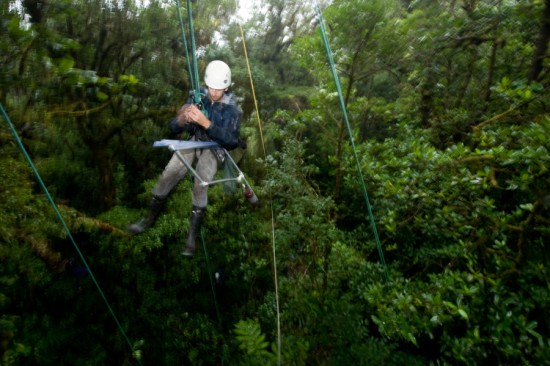
There is a world within the canopy of a tropical cloud forest that not many people get to see. In this unique ecosystem – maintained by the exceptionally wet microclimate of cloud cover—orchids, moss, lichens and other epiphytes grow in… Read more ›
Some projects implement photography as a means for exploring societal and environmental issues. One such project is gigapan.org, which allows users to share and discuss panoramic photographs (one of the most famous gigapans is of the 2009 Inauguration of President… Read more ›
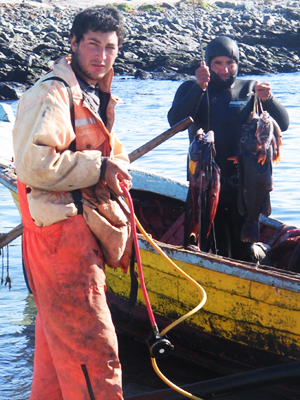
In theory, the evolution of scuba gear and wetsuits in spearfishing allow divers to produce a more abundant catch. However, Natalio Godoy from the Pontificia Universidad Católica de Chile and colleagues found that the spearfishers’ catches are becoming less diverse… Read more ›
Many science communicators suggest that the key to effectively translating climate change research is to keep the message concise, accurate and interesting, all in one tight package. Perhaps the most streamlined of platforms to communicate this science is a comic… Read more ›