National Parks, dance lessons from a spider and bellybutton biodiversity
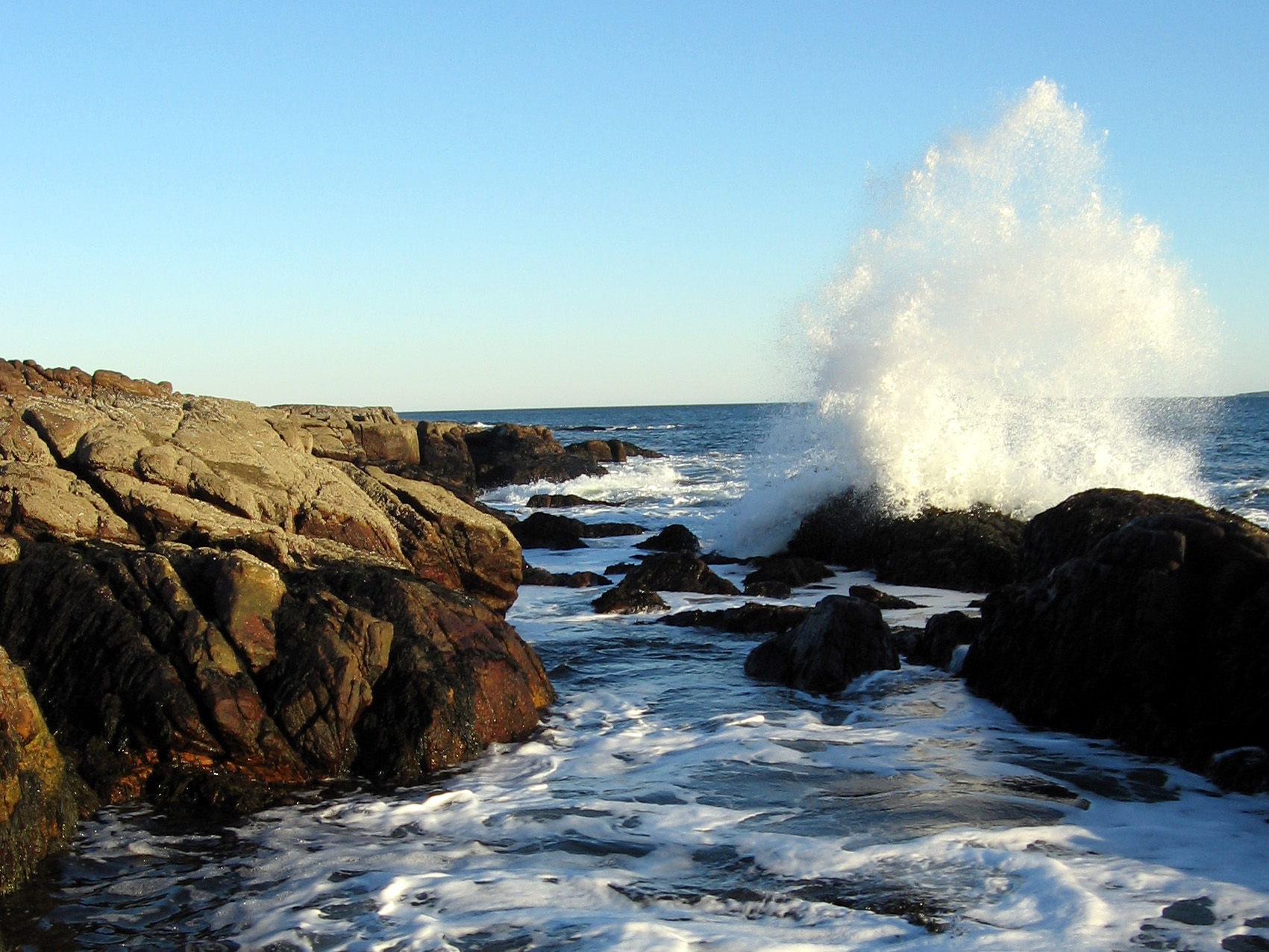
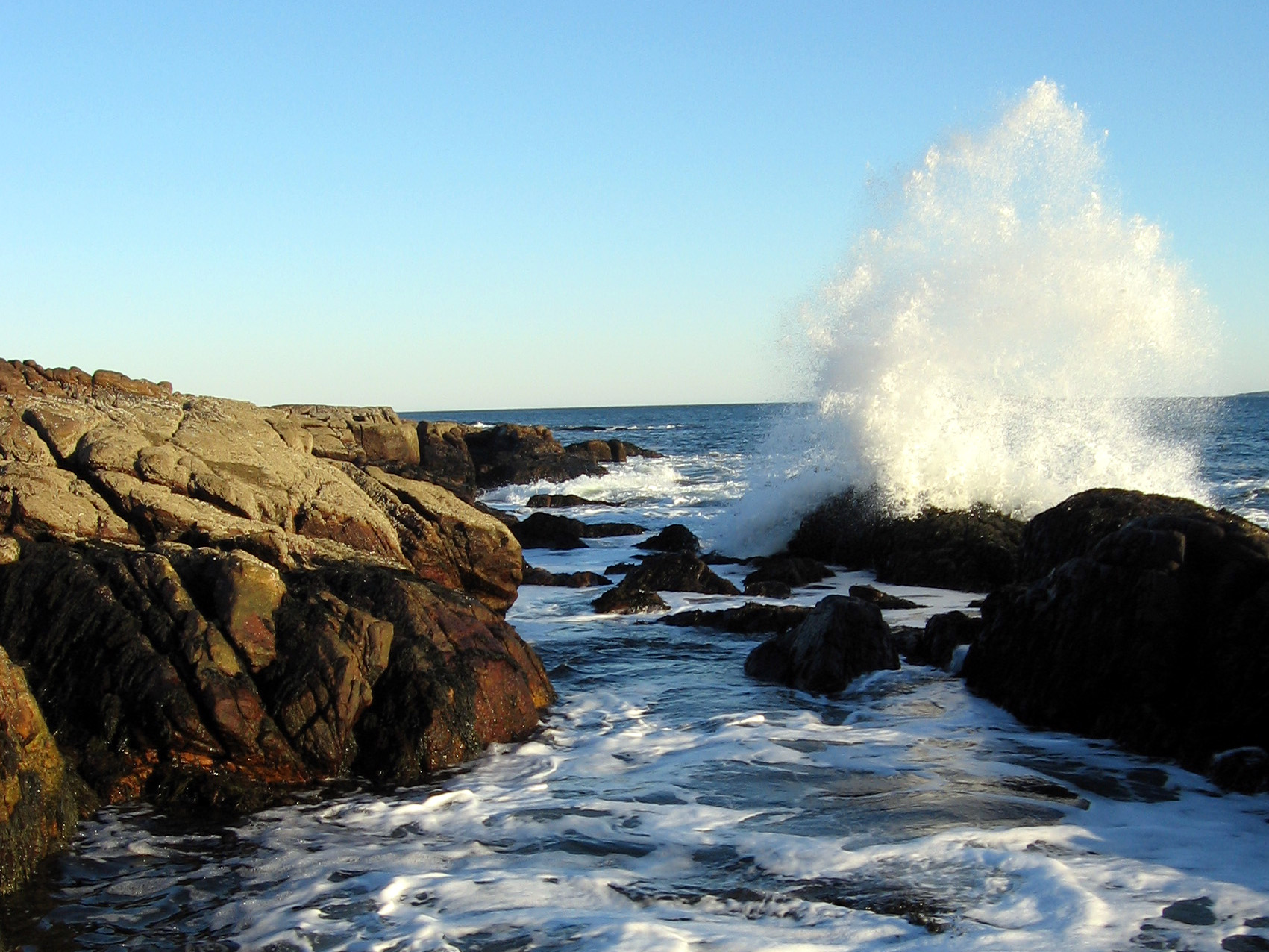
 National Parks Week: In addition to Earth Day activities, this week is also National Parks Week. Allie Wilkinson of the blog Oh, For the Love of Science! paid tribute with a mini-travel guide on Acadia National Park in Maine; the post is complete with trail information and scenic views (see below video). “Maine may as well be my home away from home,” Wilkinson wrote. “I’ve gone up just about every year since I was a baby, at LEAST once a year (but usually end up going 3 times a year), and I always go to the same spots. Each year, the big trip in August takes me to Mount Desert Island, home of Acadia National Park.” Read the full post at “National Park Week: Acadia National Park.”
Busy billionaire: Richard Branson has moved from space to deep sea exploration, and, most recently, he has made the news for his plan to introduce endangered ring-tailed lemurs to Moskito Island in the Caribbean. Branson stated in The Guardian that the decision is intended to “…create a second island habitat [for lemurs in Madagascar,] and the conditions on Moskito are perfect.” However, many are concerned about the ecological consequences of releasing these omnivores. As explained in Smithsonian’s Surprising Science blog, “Conservation plans rarely begin with (or even include) the introduction of a non-native species. And though lemurs surely are adorable, they ‘could damage native flora and fauna on the island, particularly reptiles such as the stout iguana, turnip-tailed gecko, and dwarf gecko, as well as birds’ eggs,’ [conservationist Erik Patel] says.”
Dance lessons: While we tend to think of dancing as a source of rhythmic self-expression, just like in other animal species, dancing can also be an effective way to attract a mate. Small, songless birds called manakins, for example, display an impressive moonwalk to attract a mate. And, as described in the blog immunoBLOGulin, “If you want to learn some sweet moves, take a lesson or two from the Australian Peacock Spider. While it’s less than 1cm in length, it can really put on a dancing show…” The jumping spider (Maratus volans) has a colorful flap used during the dance (see below video). Read more at “Lessons from the Peacock Spider: How to attract a mate.”
Bright bills: “When it comes to mallard bills, brighter is better: A bright yellow bill is duck-speak for ‘I’m healthy,’ attracting more female ducks than dingy green ones,” Patrick Morgan reported for Discover’s Discoblog. That is, researchers found that male ducks with brighter bills had semen with greater antibacterial properties, reducing the female ducks’ risk of contracting bacteria-related sexually transmitted diseases. The researchers discoved that “ducks whose bills had more carotenoids—an organic pigment that brightens bills—also had semen that more effectively killed E. coli,” wrote Morgan. Read more at “What the Duck? Lady Mallards May Get Down With Bright-Billed Drakes to Avoid STDs.”
Biodiversity priorities: According to a recent press release from the National Council for Science and the Environment, “[t]he cover story of the April issue of BioScience, contains the results of a process in which 35 scientists and decisionmakers met during a major snowstorm (the “snowpocalypse”) in Washington D.C. in February 2010 to synthesize ‘America’s Top 40’ research questions for biodiversity conservation and natural resource management.” The questions, which were submitted by 375 experts in resource management and policy, included “How do different agricultural practices and technologies affect water availability and quality?” and “How will changes in land use and climate affect the effectiveness of terrestrial and marine protected areas?” Read more at “Biodiversity in a rapidly changing world.”
Also, the genes that make bees sociable, inside a reef fish ecology class, fossil links reptile and human bones, the roving red fox, rigs to reefs, bellybutton as a biodiversity hot spot, measuring species extinction, a boom of leatherback turtles in Florida, one year after the Gulf of Mexico oil crisis and a website that maps species’ evolutionary splits.
< ![endif]–>
Photo Credit: NPS
Bright bills: “When it comes to mallard bills, brighter is better: A bright yellow bill is duck-speak for ‘I’m healthy,’ attracting more female ducks than dingy green ones,” Patrick Morgan reported for Discover’s Discoblog. That is, researchers found that male ducks with brighter bills had semen with greater antibacterial properties, reducing the female ducks’ risk of contracting bacteria-related sexually transmitted diseases. The researchers discoved that “ducks whose bills had more carotenoids—an organic pigment that brightens bills—also had semen that more effectively killed E. coli,” wrote Morgan. Read more at “What the Duck? Lady Mallards May Get Down With Bright-Billed Drakes to Avoid STDs.”
Biodiversity priorities: According to a recent press release from the National Council for Science and the Environment, “[t]he
Bright bills: “When it comes to mallard bills, brighter is better: A bright yellow bill is duck-speak for ‘I’m healthy,’ attracting more female ducks than dingy green ones,” Patrick Morgan reported for Discover’s Discoblog. That is, researchers found that male ducks with brighter bills had semen with greater antibacterial properties, reducing the female ducks’ risk of contracting bacteria-related sexually transmitted diseases. The researchers discoved that “ducks whose bills had more carotenoids—an organic pigment that brightens bills—also had semen that more effectively killed E. coli,” wrote Morgan. Read more at “What the Duck? Lady Mallards May Get Down With Bright-Billed Drakes to Avoid STDs.”
Biodiversity priorities: According to a recent press release from the National Council for Science and the Environment, “[t]he cover story of the April issue of BioScience, contains the results of a process in which 35 scientists and decisionmakers met during a major snowstorm (the “snowpocalypse”) in Washington D.C. in February 2010 to synthesize ‘America’s Top 40’ research questions for biodiversity conservation and natural resource management.” The questions, which were submitted by 375 experts in resource management and policy, included “How do different agricultural practices and technologies affect water availability and quality?” and “How will changes in land use and climate affect the effectiveness of terrestrial and marine protected areas?” Read more at “Biodiversity in a rapidly changing world.”
Also, the genes that make bees sociable, inside a reef fish ecology class, fossil links reptile and human bones, the roving red fox, rigs to reefs, bellybutton as a biodiversity hot spot, measuring species extinction, a boom of leatherback turtles in Florida, one year after the Gulf of Mexico oil crisis and a website that maps species’ evolutionary splits.
cover story of the April issue of BioScience, contains the results of a process in which 35 scientists and decisionmakers met during a major snowstorm (the “snowpocalypse”) in Washington D.C. in February 2010 to synthesize ‘America’s Top 40’ research questions for biodiversity conservation and natural resource management.” The questions, which were submitted by 375 experts in resource management and policy, included “How do different agricultural practices and technologies affect water availability and quality?” and “How will changes in land use and climate affect the effectiveness of terrestrial and marine protected areas?” Read more at “Biodiversity in a rapidly changing world.”
Also, the genes that make bees sociable, inside a reef fish ecology class, fossil links reptile and human bones, the roving red fox, rigs to reefs, bellybutton as a biodiversity hot spot, measuring species extinction, a boom of leatherback turtles in Florida, one year after the Gulf of Mexico oil crisis and a website that maps species’ evolutionary splits.
Photo Credit: NPS